You've spent weeks perfecting your brand's look. The logo is polished, the colors are spot-on, and you're finally ready to order your custom folding boxes. Then the samples arrive—and something is off. Maybe the box won't run through the machine. Maybe the magnetic flap keeps popping open. Maybe the whole thing just doesn't feel as premium as you imagined.
These are not rare disasters. They are the five most common mistakes brands make when ordering custom folding boxes for the first time—and every single one of them is completely avoidable.
I've seen these mistakes happen again and again, from small startups to established brands. They're almost always caused by the same thing: not knowing what to ask before placing an order. Let me walk you through each one so you don't have to learn the hard way.
1: Assuming Any Size Will Work on a Folding Box Machine
You design the perfect tall, slender gift box. It looks elegant on screen. You send the dimensions to the factory. Then comes the bad news—it won't run on a standard folding machine.
Folding boxes have real physical limits. Height must be at least around 6 cm to allow proper folding and gluing. The total unfolded layout (height × 3 + side widths × 2) should stay under roughly 130 cm, with length ideally under 80 cm, to qualify for automated machine production.
Here's why this matters more than most people think. Automated machines produce clean, precise folds with consistent glue placement at high speed. If your box dimensions push outside those limits, the entire order shifts to hand assembly. Hand assembly isn't a disaster—but it does introduce slightly less precision, slower turnaround, and often higher labor costs per unit.
The sneaky part is that the difference between "machine-friendly" and "hand-assembly" can sometimes be just a centimeter or two in your unfolded layout. That's why I always recommend verifying your dieline dimensions with your supplier before finalizing any artwork.
How to Check Before You Order
Use this simple layout formula before submitting your design:
| Dimension | Minimum | Safe Machine Limit | Over Limit |
|---|---|---|---|
| Box Height | 6 cm | Up to ~40 cm | Hand assembly needed |
| Unfolded Total Length | — | Under ~130 cm | Hand assembly needed |
| Single Side Length | — | Under ~80 cm | Hand assembly needed |
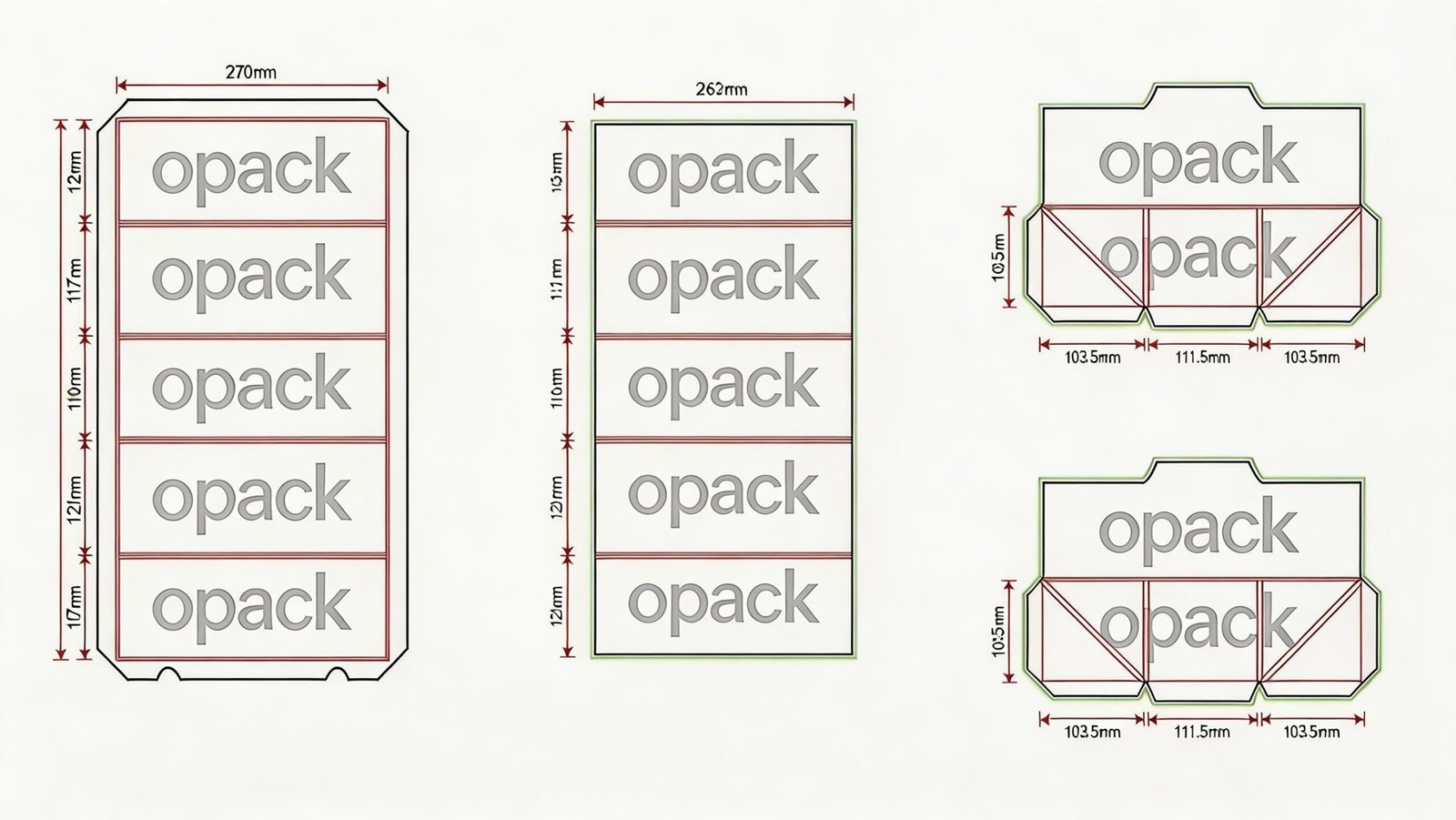
The rule of thumb I always give clients is this: if your box feels unusually tall, wide, or long for its category, double-check the math. Most problems disappear with a quick dimension review before a single sheet of paper gets printed.
2: Treating Your Folding Box Like It's Indestructible
Here's a fun fact that surprises most people: an average adult—around 120 lbs (55 kg)—can stand on a folding gift box and it will likely hold. The structure is genuinely tougher than it looks. Paper-based packaging has real engineered strength built in.
But toughness is not the same as invincibility. Folding boxes are designed for smart, everyday protection—not extreme impact. A high drop onto concrete or rough handling in a warehouse will cause real damage, including dents, tears, and popped corners.
Think of a folding box like elegant armor. It handles the bumps and pressures of everyday handling beautifully. It absorbs minor compression and stacking loads without complaint. But the moment it hits the edge of a loading dock or gets thrown across a warehouse floor, you're asking it to do something it was never built for.
Protect the Box, Protect the Experience
The premium unboxing moment your customer experiences at the end depends on how well the box was protected throughout its journey. Here's how I tell clients to think about it:
| Scenario | How the Box Performs | What to Do |
|---|---|---|
| Light stacking (normal storage) | Handles well | Standard packaging |
| Everyday courier handling | Generally fine | Minimal extra protection |
| Long-distance freight | Higher risk of dents | Use outer shipping carton |
| Rough warehouse environments | Damage likely | Add inner cushioning + outer box |
| High-drop impact (over 1 meter) | Corners will suffer | Always use secondary packaging |
The fix is simple and cheap: ship folding boxes inside an outer corrugated carton with cushioning material. This one step protects that beautiful premium finish all the way to your customer's door—and keeps the unboxing moment exactly as you designed it.
3: Ignoring How Magnetic Closures Behave Over Time
Clients often come to me confused. They ordered magnetic closure boxes, but the flaps keep popping open. They blame the magnets. In almost every case, the magnets are fine.
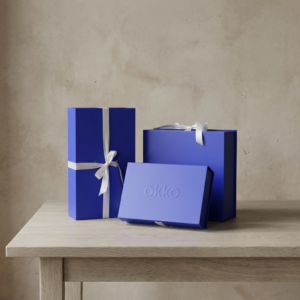
The real cause of a weak magnetic closure is usually a flap overlap that's too short to generate enough pull force. The fix is simple: lay the box flat, stack some weight on top for a few hours, and let the material compress and train itself into position. The magnet grip improves dramatically.
This is one of those problems that sounds serious but has a completely low-tech solution. The paperboard around the magnet area is slightly springy when new. Applying light compression overnight resets that springiness and gives the magnet a shorter gap to close.
The Sea Freight Problem Nobody Talks About
There is a second, trickier magnetic issue that I want every client to know about before they ship internationally.
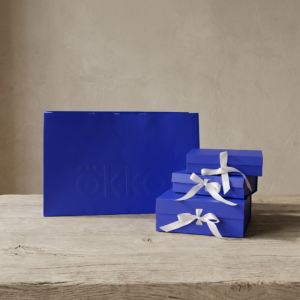
Long ocean voyages expose your boxes to serious temperature swings. Containers sitting in tropical sun can reach 60°C or higher. Cold cargo holds at night can drop well below 10°C. That cycle of expansion and contraction weakens the magnetic hold—especially with neodymium magnets, which are sensitive to temperature extremes.
The good news: it usually bounces back once the boxes reach room temperature. But plan for it anyway:
| Shipping Method | Magnetic Risk Level | Recommended Action |
|---|---|---|
| Local courier | Low | Standard magnets fine |
| Air freight | Low | Standard magnets fine |
| Short sea route (under 2 weeks) | Medium | Test on arrival |
| Long sea route (over 3 weeks) | Higher | Stronger magnets or longer flap overlap |
| Tropical climate destination | Higher | Let boxes rest 24 hours before use |
A slightly longer flap overlap and marginally stronger magnets adds almost nothing to the unit cost—but it saves real headaches when boxes arrive on the other side of the world.
4: Refusing to Pay for a Proper Sample
When a supplier quotes $100 or more for a single prototype, the reaction from most new clients is predictable: "That's a lot of money for one box." I understand why it feels that way. It isn't.
A prototype fee covers real machine setup, material costs, printing plates, and skilled labor—all of which simulate your full production run exactly. Catching a weak glue joint, a color shift under foil, or a fold that doesn't crease cleanly at the sample stage costs $100. Catching it after 5,000 boxes are printed costs thousands.
Here's a breakdown of where that sample cost actually goes:
| Cost Component | Approximate Share | Why It Matters |
|---|---|---|
| Die-cutting setup | ~$30–50 | Same tooling used in full production |
| Printing plate/proofing | ~$20–40 | Verifies real ink colors on real material |
| Specialty finish dies (foil, emboss) | ~$20–50 | Tests actual finish quality and registration |
| Labor and machine time | ~$10–20 | Skilled operator time, not automated |
Spread those same setup costs across 10,000 units, and they become fractions of a cent per box. The sample is where you get to catch problems before they multiply.
I've watched clients skip samples to save $150—and end up reprinting entire orders worth $8,000 or more because the foil placement was slightly off, or the box sides bowed outward due to a material weight issue. The sample isn't an extra cost. It's your best insurance policy.
Mistake #5: Assuming a Folding Box Is Always the Right Choice
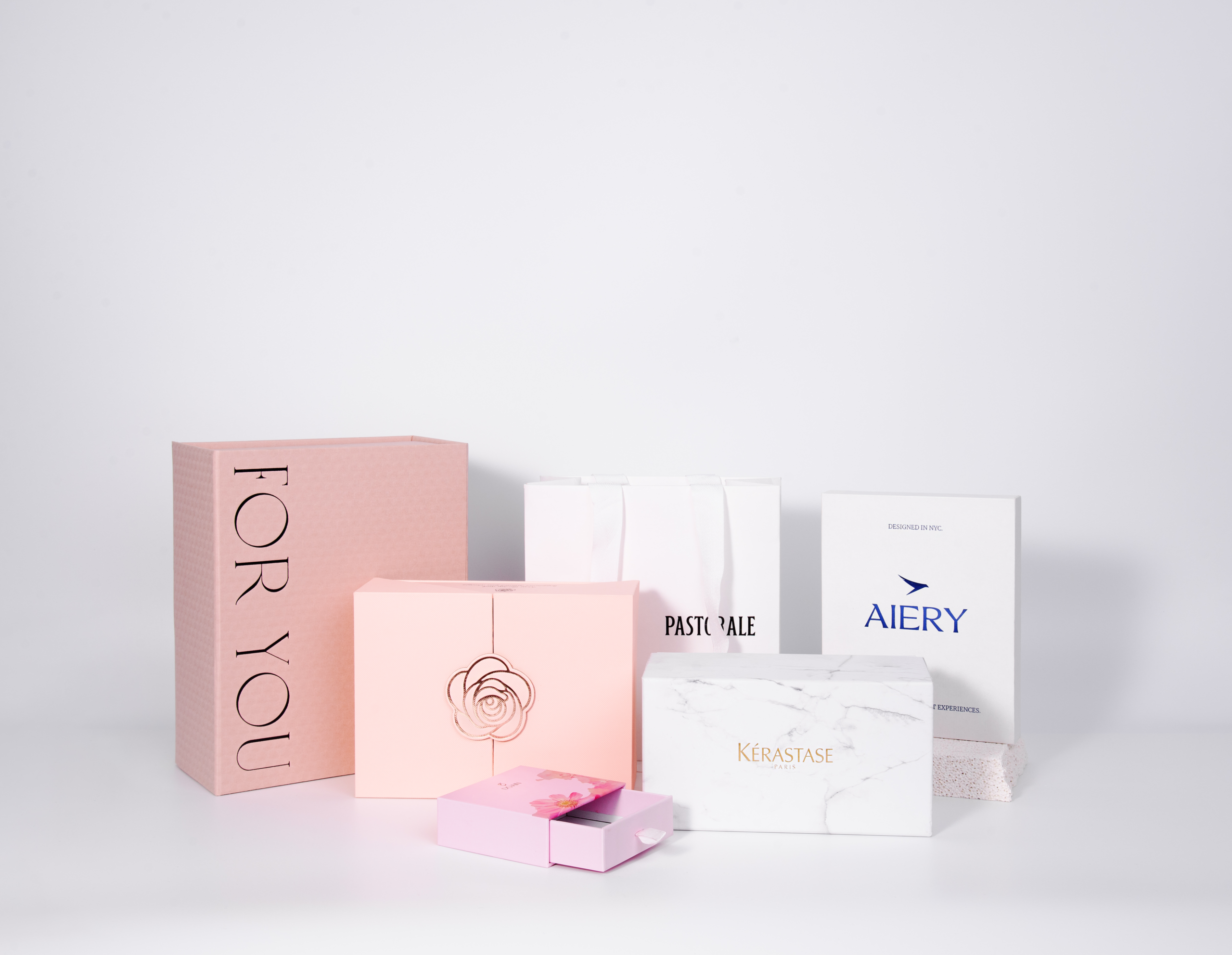
Folding boxes solve a lot of problems beautifully. They ship flat, store efficiently, cost less per unit, and have a much lower freight cost than pre-assembled alternatives. For apparel, cosmetics, mid-range gifts, and seasonal products, they're often the perfect choice.
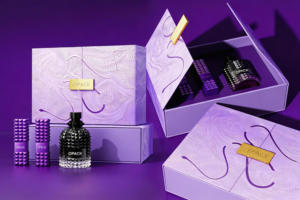
But for ultra-premium products—fine jewelry, luxury watches, high-end perfume, or premium accessories—the physical experience of a rigid box or book-style lid often does something a folding box simply cannot: it makes the moment feel like an occasion.
Think about the last time you opened something that felt genuinely special. There was probably a moment of resistance before the lid released. A satisfying weight in your hands. A solid, quiet sound when it closed. That sensory experience isn't accidental—it's engineered into rigid packaging specifically to amplify perceived value.
Choosing the Right Structure for Your Brand
Here's how I help clients decide between folding and rigid packaging:
| Factor | Folding Box Advantage | Rigid Box Advantage |
|---|---|---|
| Unit cost | Lower | Higher |
| Freight cost | Much lower (ships flat) | Higher (ships assembled) |
| Perceived luxury | Modern, sleek | Premium, heirloom-feel |
| Unboxing experience | Clean and efficient | Ceremonial and dramatic |
| Reusability by customer | Moderate | High |
| Best product match | Apparel, cosmetics, gifts | Jewelry, watches, perfume |
The folding box is a brilliant problem-solver. It handles volume, controls costs, and can look genuinely premium with the right finish. But when your product's price tag is telling one story and your packaging is telling another, there's a disconnect that customers feel even if they can't name it.
The rigid box is a storyteller. The weight of it, the way the lid lifts, the moment of stillness before the product is revealed—all of it adds up to a perception of quality that matches what's inside.
Final Thought
Every one of these five mistakes shares the same root cause: not asking enough questions before committing to an order. The good news is that all five are easy to avoid once you know what to look for.
Verify your dimensions against machine limits. Plan for real-world shipping conditions. Understand how magnetic closures behave. Pay for the sample. And be honest about whether a folding box actually serves your brand's positioning—or whether a rigid box tells a better story.
Get those five things right, and your custom folding boxes will do exactly what great packaging is supposed to do: make every customer feel like they received something worth keeping.